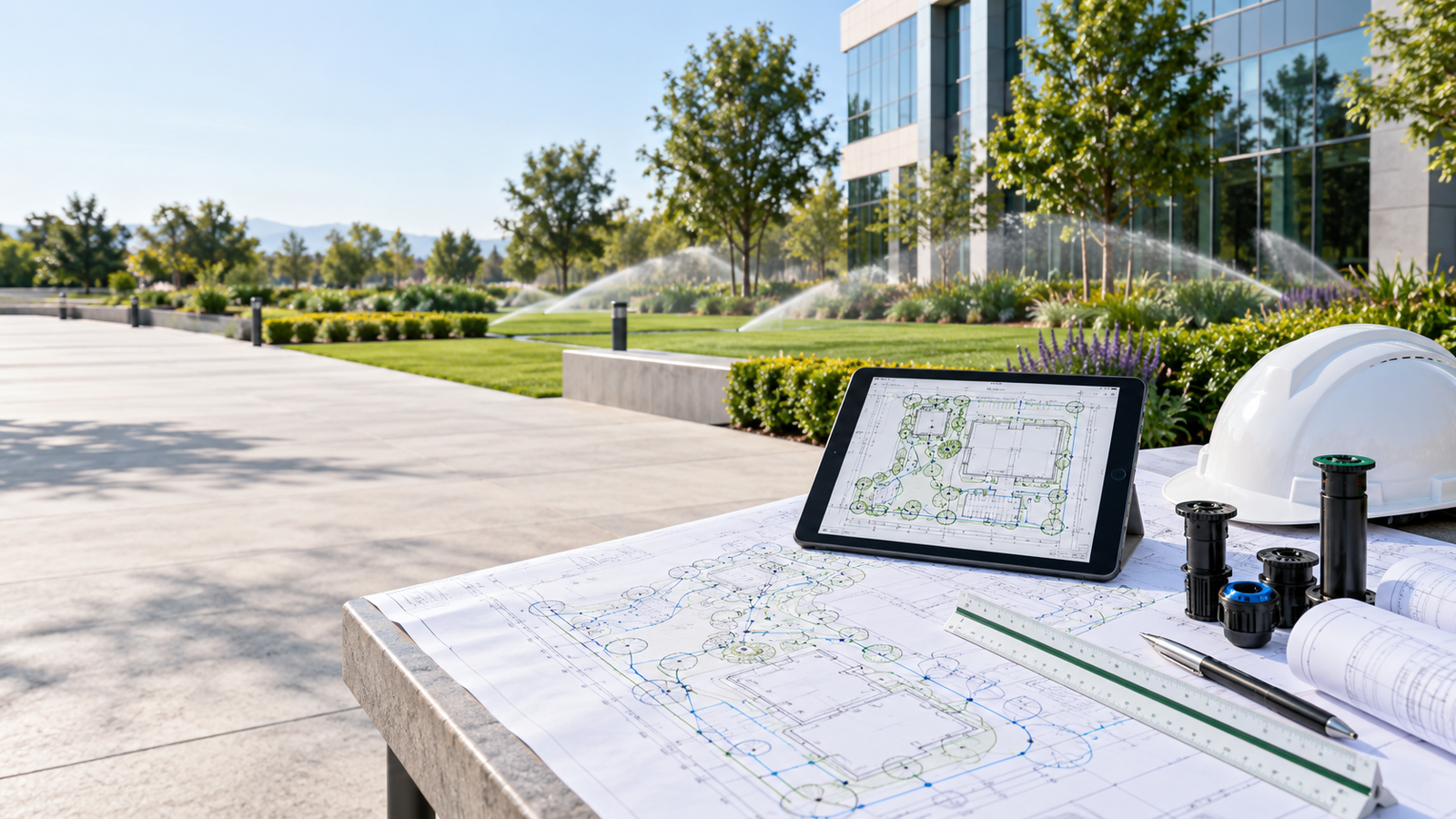
Independent irrigation design and hydraulic review for contractors, distributors, designers and project teams. We help identify potential design, hydraulic, quantity and constructability concerns before they reach the field.
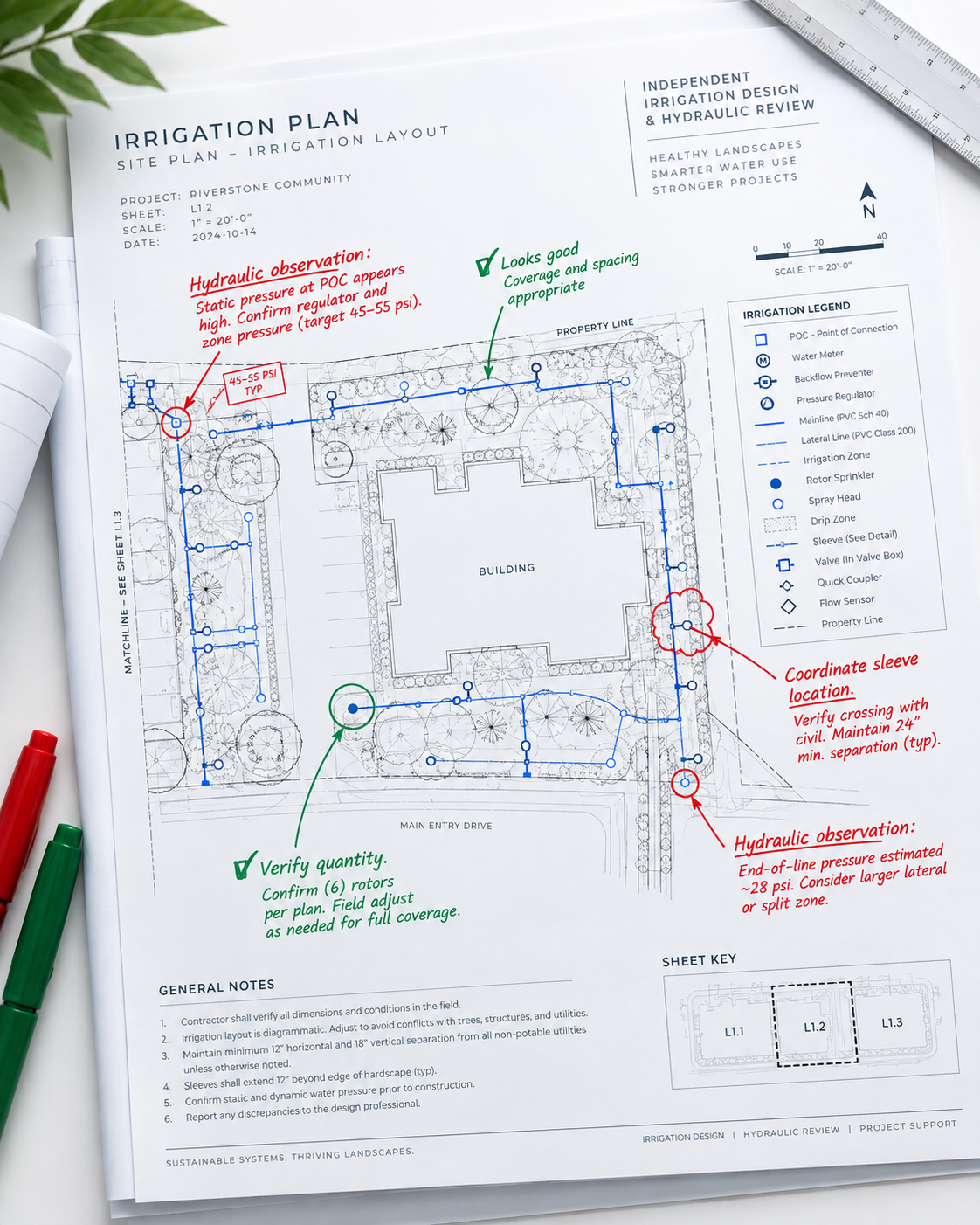
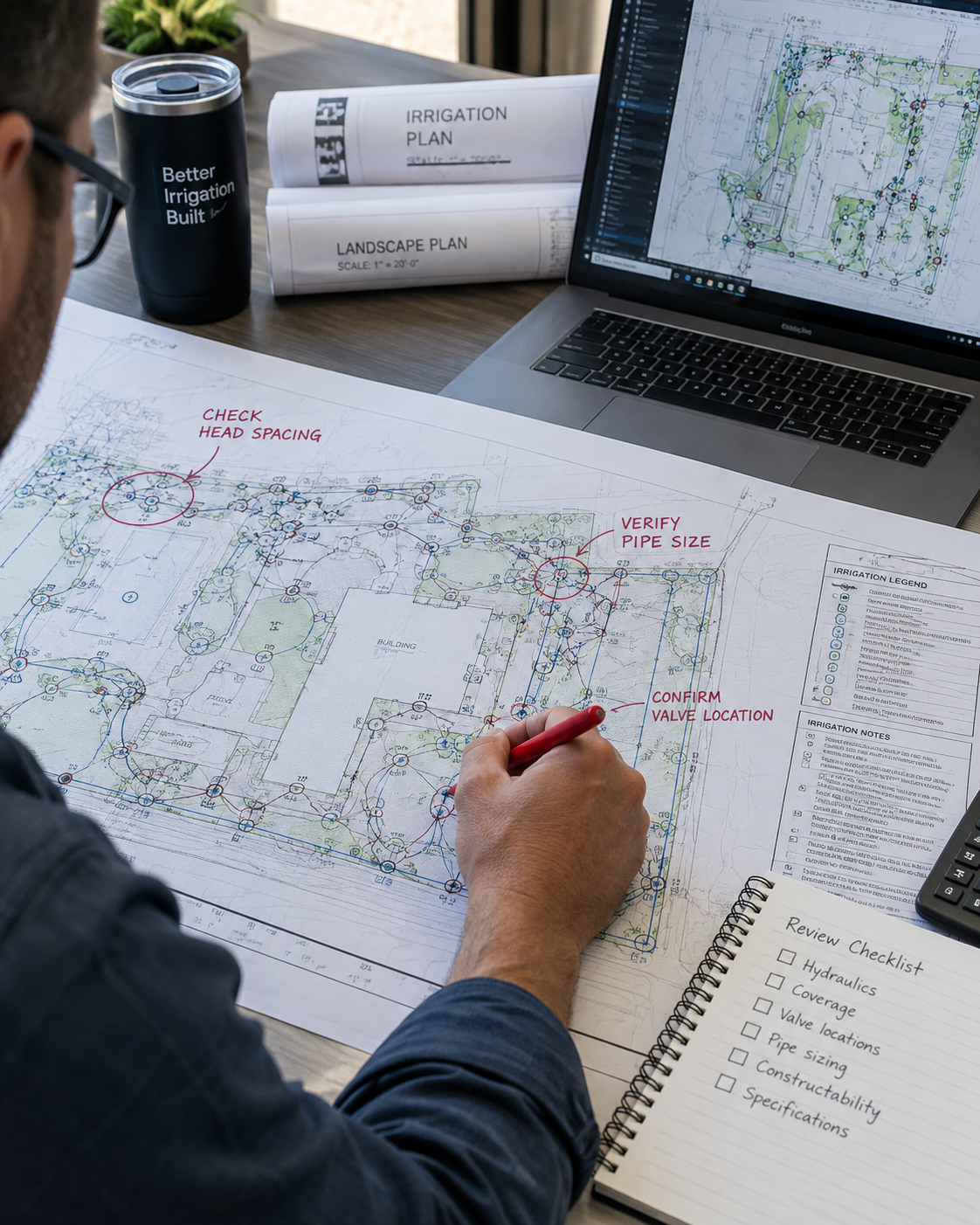
IrriReview provides an independent technical review between design and construction. We examine the details that can affect estimating, coordination, installation and system performance.
The goal is not to replace your designer. The goal is to give your project team another technical checkpoint before money, materials and crews are committed to the field.
A separate technical perspective before construction.
Identify potential concerns before field commitment.
Support estimating, procurement and installation planning.
Add another QA layer between design and construction.
Our review focuses on the technical details that can influence system performance, estimating, procurement, coordination and field installation.

Flow, pressure, friction loss, velocity, hydraulic balance and zone performance.

Mainline and lateral sizing, connections, routing and potential restrictions.

Head spacing, coverage patterns, precipitation considerations and layout concerns.

Valve sizing, equipment selection, pressure requirements and compatibility.

Potential quantity discrepancies, missing components and scope concerns.

Controller location, wiring, zones and coordination considerations.

Sleeves, access, installation conflicts and field coordination concerns.

Conflicts or inconsistencies between drawings, details and specifications.
The original designer is focused on creating the design. The estimator is focused on scope and pricing. The contractor is focused on coordination and installation.
IrriReview focuses specifically on reviewing the irrigation design before it reaches construction.
Depending on the project scope, the review can include the following technical observations and review outputs.
Review comments and technical observations organized directly around the irrigation plans.
Notes related to flow, pressure, pipe sizing, velocity and hydraulic performance.
Potential quantity, equipment and material-selection items that should be verified.
Observations related to installation, coordination, sleeves, access and field conditions.
Important items highlighted so your team can focus on what should be reviewed first.
A practical summary designed to support project discussions and next-step decisions.

Review plans before bidding or construction and add another technical QA checkpoint.

Add technical review before finalizing material recommendations, proposals or packages.

Add irrigation-specific QA without building a large internal technical review team.
Identify scope, quantity and constructability concerns earlier.

Use an independent second review before plans reach construction.

Add irrigation-specific QA to the broader preconstruction process.
Irrigation plans and specifications are prepared.
IrriReview provides a separate technical checkpoint.
Scope, materials and coordination are refined.
The project moves into procurement and field installation.
A review is most valuable when it happens early — before procurement, installation and field coordination make changes more expensive.
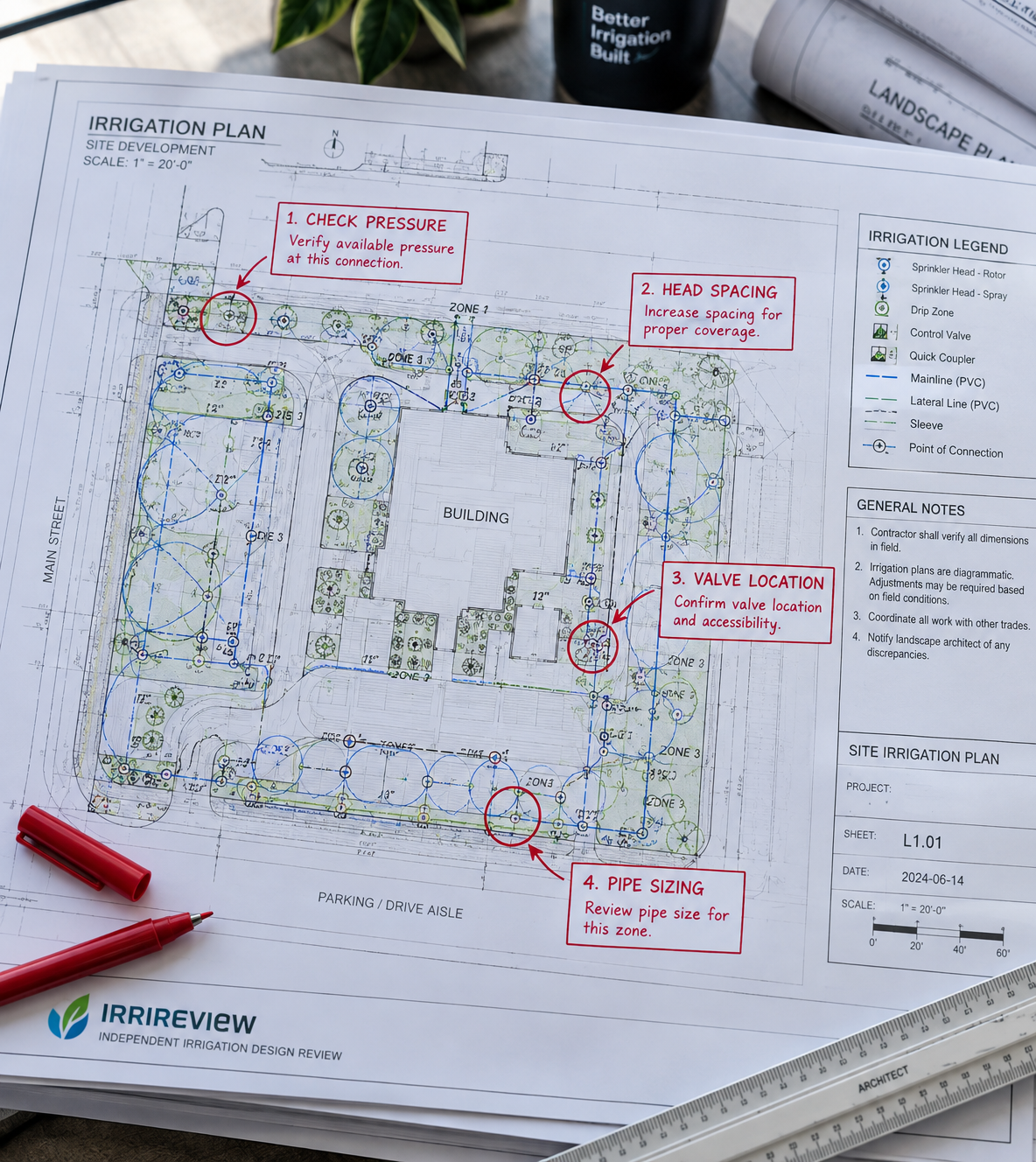
Review findings should be presented as technical observations — not as criticism of the original designer.
A hydraulic condition has been identified that should be verified before construction.
The condition may influence pressure, flow or zone performance if left unresolved.
Confirm the design condition and applicable project requirements before procurement or installation.
IrriReview focuses on the irrigation-specific details that influence system performance, scope, coordination and constructability.
Submit one irrigation project for a focused review. IrriReview will provide practical technical observations so you can see how an independent review can support estimating, coordination and preconstruction decisions.
Review the irrigation design before construction begins. Give your project team an independent technical checkpoint before materials, labor and field resources are committed.